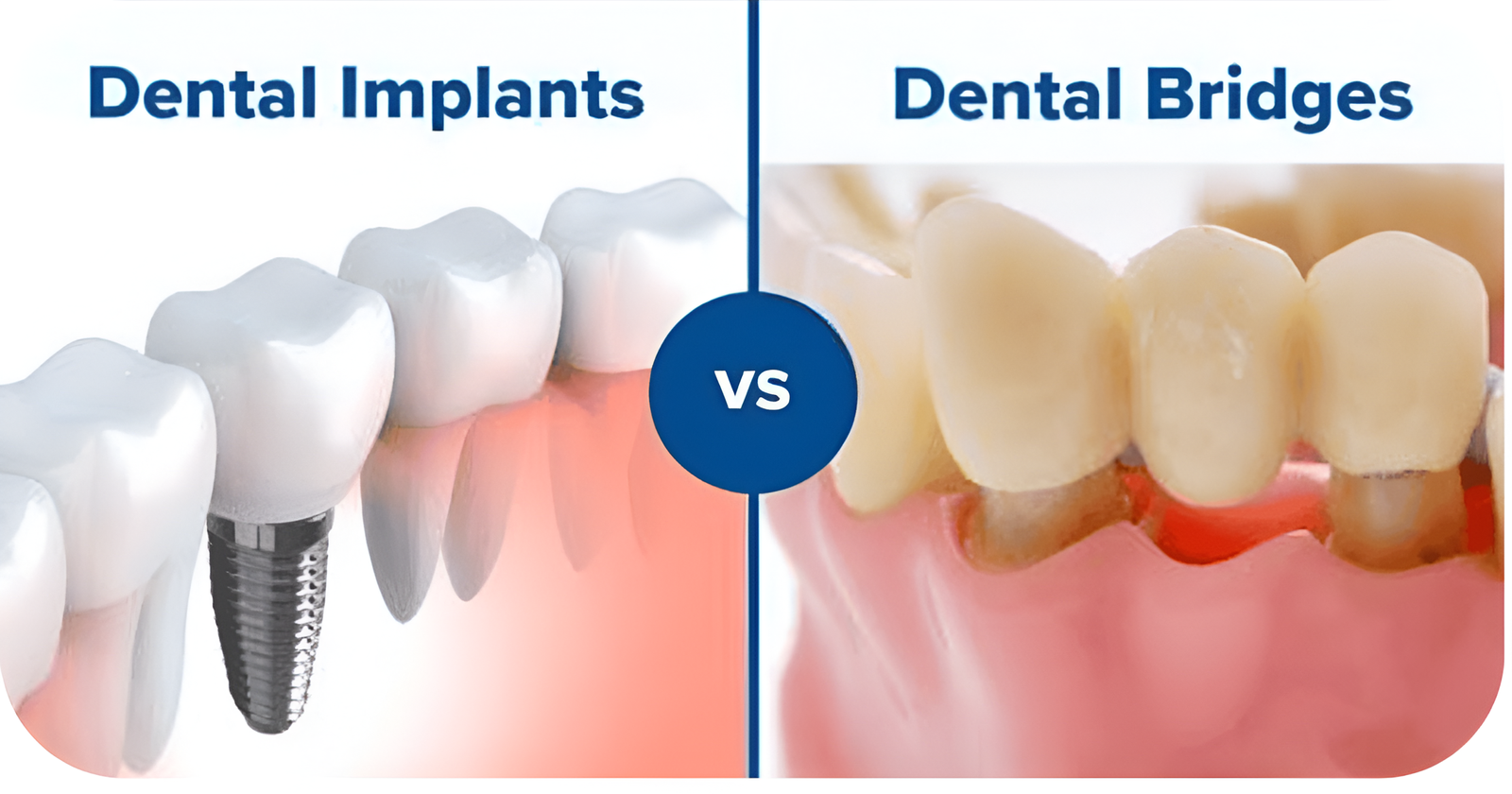
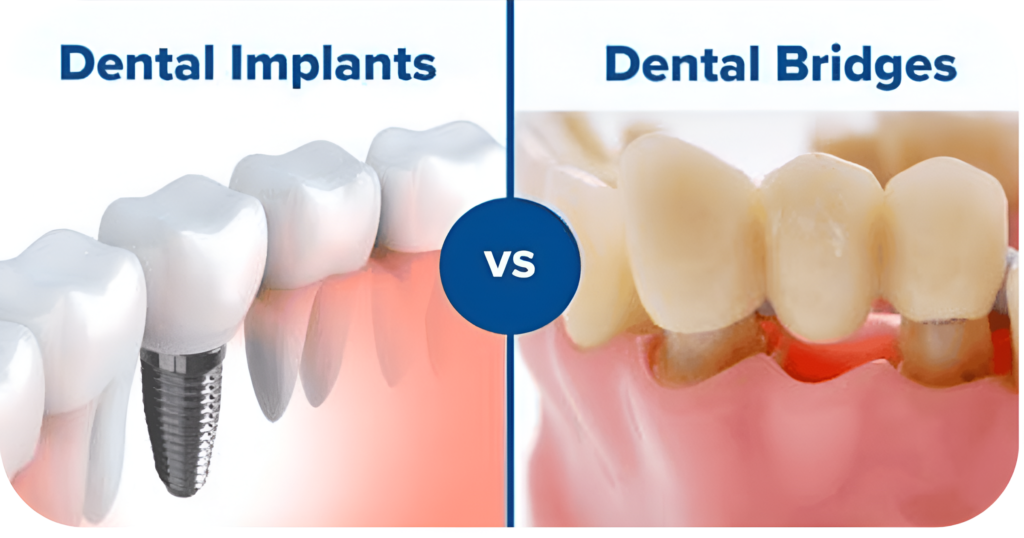
Replacing a missing tooth is not only about appearance; it influences chewing, speech, and long-term jawbone strength. Dental implants act like natural roots, supporting the bone and preventing shrinkage over time. They look and feel like your own teeth, allowing you to smile, eat, and speak without worry. Bridges are another dependable choice, especially when surrounding teeth already need support. Both options restore confidence, but implants usually last longer because they integrate with the bone and function independently. The right choice depends on your oral health, bone structure, and lifestyle, and a clear discussion with your dentist helps you understand what fits best.
While implants require healing before placing the final crown, the result is stable and low-maintenance. Bridges can be completed faster and offer reliable strength, but they rely on nearby teeth for support. Choosing between the two is easier when you look beyond appearance and consider future comfort and durability. Your dentist guides you through timelines, care requirements, and expectations so you feel confident in your decision. When thoughtfully planned, both options restore balance, protect your oral structure, and improve daily life through renewed function and comfort.